

The FIFA World Cup 2026 economic impact is already becoming visible across industries, markets, and host cities. As the tournament unfolds across the United States, Canada, and Mexico, businesses, tourism operators, brands, and investors are witnessing how football’s biggest event can influence spending, consumer confidence, and economic activity during a period of global uncertainty.
It is providing a real-time snapshot of how the world behaves during a period of economic uncertainty, geopolitical tension, and ongoing regional conflicts.
Inflation has affected household spending. Businesses have navigated supply chain disruptions. Investors have responded cautiously to political instability. Meanwhile, conflicts in different parts of the world continue to influence markets, energy prices, trade, and consumer confidence.
Yet despite these realities, millions of fans are travelling, brands are investing heavily, and businesses across multiple industries are experiencing increased activity.
The question is no longer whether the FIFA World Cup can generate economic impact. It already is.
FIFA World Cup 2026 Economic Impact During Global Challenges
One of the most remarkable aspects of FIFA World Cup 2026 is not the football itself. It is the fact that the tournament is thriving against a backdrop of continued uncertainty.
Consumers remain cautious in many regions, while businesses continue balancing growth ambitions with financial realities. Yet the World Cup demonstrates something important.
People may postpone major purchases. They may become more selective about spending. But they rarely stop seeking experiences, entertainment, and moments of connection.
The tournament has once again proven that global sporting events occupy a unique place within both society and the economy.
Why Brands Continue Investing During Uncertain Times
If uncertainty truly paralysed economic activity, brands would reduce visibility, delay campaigns, and avoid major marketing investments.
Instead, the opposite is happening.
From global sponsors to local businesses, organisations are investing heavily in World Cup-related campaigns, partnerships, digital content, and fan experiences.
Why? Because attention remains one of the world’s most valuable commodities.
The FIFA World Cup offers something few platforms can match:
- Billions of viewers
- Highly engaged audiences
- Emotional connections
- Global reach
- Real-time interaction
For brands, visibility during moments of collective attention can be more valuable than visibility during periods of stability.
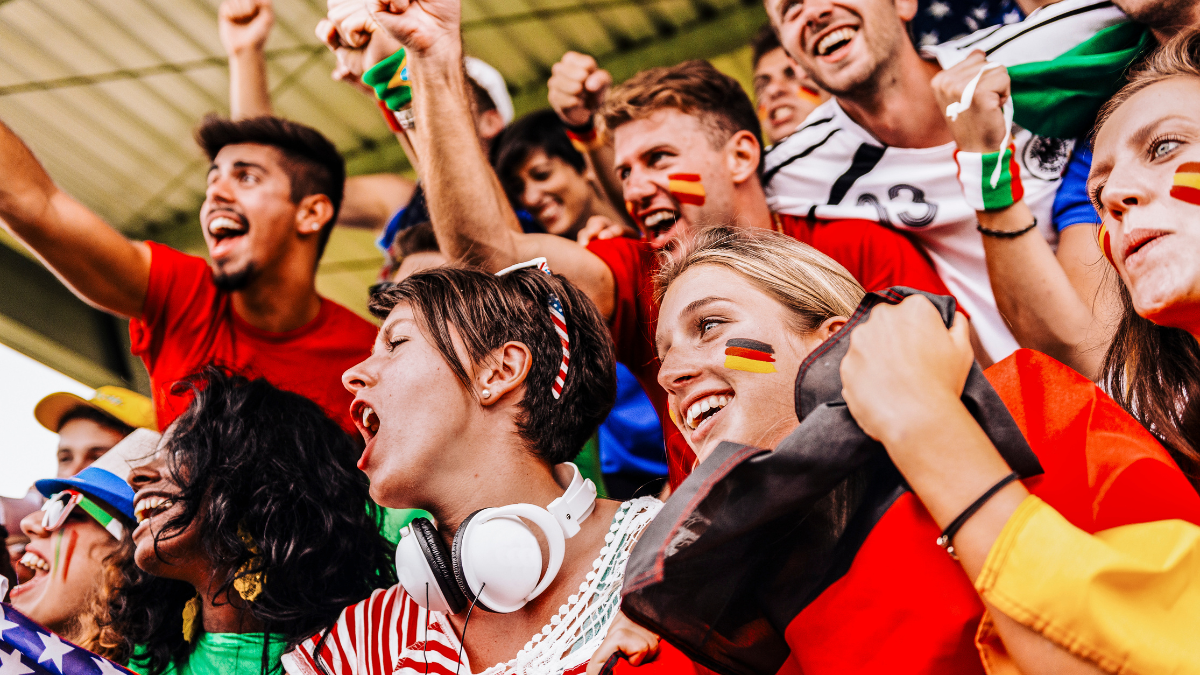 FIFA World Cup 2026 Economic Impact on Tourism and Hospitality
Tourism is often one of the first sectors affected by economic uncertainty. Yet major sporting events continue to demonstrate the industry’s resilience.
Fans are travelling across borders, booking hotels, attending matches, and participating in fan experiences despite broader concerns about economic conditions.
This behaviour reveals an important shift in consumer priorities.
Many travellers increasingly view experiences as essential rather than optional. The World Cup has become more than a sporting event. It is a cultural experience, a social gathering, and for many supporters, a once-in-a-lifetime opportunity.
As a result, tourism-related industries continue to benefit from the tournament’s ability to attract visitors and stimulate spending.
Can Ceasefires and De-escalation Efforts Improve Economic Confidence?
Recent diplomatic developments and ceasefire efforts in certain regions have raised questions about whether improving stability could support economic recovery.
History suggests that markets often respond positively when tensions ease. Businesses become more confident. Consumers become more willing to spend. Investors perceive lower levels of risk. Tourism and travel activity often improve.
However, economic recovery rarely happens overnight. The effects of conflict can remain visible long after headlines move on.
The FIFA World Cup cannot reverse the impact of geopolitical instability. What it can do is amplify positive momentum when confidence begins to return.
In this sense, the tournament acts less as a solution and more as an accelerator.
Understanding the FIFA World Cup 2026 Economic Impact on Consumer Spending
Traditional economic discussions often focus on interest rates, inflation, trade, and investment. Yet consumer confidence remains one of the most powerful economic drivers.
People spend when they feel optimistic. Businesses invest when they believe opportunities exist. Markets respond when confidence improves.
The World Cup contributes to this dynamic by creating a shared sense of anticipation and engagement.
Across host cities and participating nations, businesses prepare for increased demand:
- Hotels hire staff
- Restaurants extend operating hours
- Retailers launch promotions
- Media companies expand coverage
- Airlines increase capacity
- Technology platforms experience spikes in engagement
These activities generate economic momentum not because football itself creates wealth, but because the event encourages participation across entire ecosystems.
 The Political Significance of a Global Gathering
The FIFA World Cup has always existed at the intersection of sport and politics.
Whether through diplomacy, cultural exchange, or national representation, the tournament has become one of the world’s most visible international stages.
In a period marked by political divisions and geopolitical tensions, the tournament provides an opportunity for nations to engage through competition rather than confrontation.
The joint hosting model adopted by the United States, Canada, and Mexico is itself an example of cross-border collaboration on a global scale.
While football cannot resolve international disputes, it can create spaces where dialogue, cooperation, and shared experiences become possible.
Why Hope Matters More Than Ever
The word “hope” is often associated with emotion rather than economics. However, hope plays a crucial role in economic activity.
Without confidence in the future:
- Consumers spend less
- Businesses invest less
- Markets become more cautious
- Growth slows
Hope influences decisions. It affects behaviour. And when multiplied across millions of individuals and organisations, it can contribute to economic momentum.
The FIFA World Cup embodies this principle. It gives people something to anticipate, creates opportunities for businesses, and reminds audiences that global events can still bring people together despite differences.
A Rare Moment of Global Connection
Perhaps the most valuable aspect of FIFA World Cup 2026 cannot be measured through ticket sales, sponsorship revenue, or tourism statistics.
It is the sense of connection it creates.
At a time when global conversations are often dominated by conflict, division, and uncertainty, billions of people are participating in the same event, watching the same matches, and sharing the same moments.
Football does not erase political disagreements. It does not eliminate economic challenges. But it creates common ground.
And in today’s world, common ground has become increasingly valuable.
Final Thoughts
FIFA World Cup 2026 arrives during one of the most complex periods the global economy has faced in recent years.
Businesses continue adapting to uncertainty. Consumers remain mindful of spending. Political tensions continue to influence markets and decision-making.
Yet the tournament is revealing something important.
Economic activity does not stop during difficult times. Businesses continue seeking opportunities. Consumers continue investing in meaningful experiences. Brands continue competing for attention. And people continue looking for moments that bring them together.
The World Cup may not solve the world’s challenges.
But it demonstrates that even during uncertainty, optimism, engagement, and economic momentum remain possible.
In that sense, FIFA World Cup 2026 is more than a sporting event. It is a reminder that hope itself can be an economic force.
Related Post
Starbucks Korea Marketing Crisis
The Starbucks Korea marketing crisis has become one of the…

AI, War, and the New Media Reality: When Truth Becomes Optional
We are no longer witnessing wars only on the ground.…
