
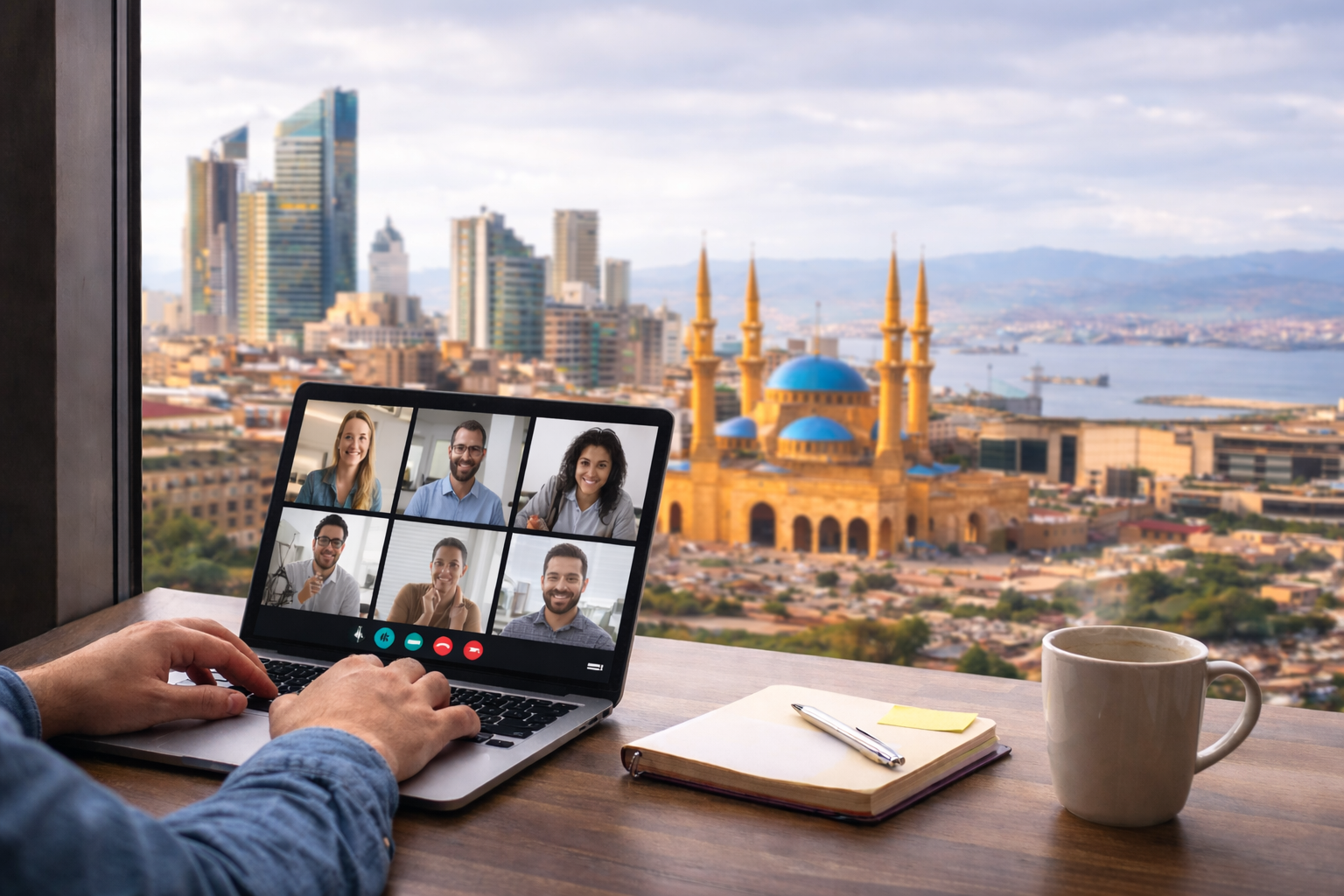
Working remotely from an insecure Lebanon while collaborating with confident, thriving nations has always created a dilemma within me.
Why is my country like no other?
Why do I contribute to the success of other nations while my homeland struggles to stand on its feet?
How do I continue?
These questions come and go in waves.
Working from home while watching the disasters of your homeland on television is not easy.
Working from home while scrolling through melancholic headlines on social media is not easy.
Working from home while hearing rockets in the distance or waiting for urgent news notifications is not easy.
Yet in today’s world, thousands of professionals living in countries facing instability, conflict, or economic crisis continue to work remotely for organizations abroad.
Behind the comfort of the word “remote work”, there are realities that are rarely discussed.
Remote work from a wounded nation carries its own silent emotional weight.
Hidden Emotional Conflict
When you work remotely from a country experiencing instability, your daily life often becomes a paradox.
On one side, you are participating in global productivity: attending meetings, delivering projects, achieving results, contributing to growth and success.
On the other side, you are emotionally connected to a place that may be experiencing uncertainty, fear, or loss.
Your professional world moves forward.
Your personal world sometimes feels paused.
You may spend your morning attending a strategy meeting with colleagues in stable economies and your afternoon checking news updates about your hometown.
You may finish a project milestone while simultaneously worrying about the safety of your community.
This emotional contrast can quietly drain your energy.
Not because you are weak, but because you are human.
Mental Weight of Constant Information
Another difficulty of working remotely in uncertain environments is the constant exposure to information.
News updates.
Social media alerts.
Emergency messages.
Rumors and speculations.
Your phone becomes both your professional tool and your emotional trigger.
You open your laptop to answer emails and suddenly find yourself reading headlines that remind you of the fragile reality surrounding you.
The mind becomes overloaded.
Concentration becomes harder.
And yet the professional expectations remain the same.
Deadlines must be respected.
Meetings must be attended.
Work must continue.
Learning how to protect your mental space becomes essential.
Accepting what We Cannot Control
One of the most important lessons I have learned while working remotely from Lebanon is accepting that not everything is within our control.
When living in uncertain environments, we often try to absorb every piece of information, every development, every possibility.
But constantly carrying the weight of the entire situation is emotionally exhausting.
At some point, we must accept that we cannot control geopolitical tensions, economic instability, or the decisions of governments.
What we can control is our attitude, our actions, and our daily choices.
Accepting this truth helps release part of the invisible pressure.
 Creating Small Rituals of Balance
Over time, I discovered that maintaining balance does not necessarily require grand solutions.
Sometimes it comes from very simple habits.
After finishing work — even if the day was long or demanding — I try to disconnect for a moment.
Breathe.
Sleep.
Cook something simple.
Go for a walk.
Exercise.
Read a few pages of a book.
Write down thoughts that accumulate during the day.
These moments may appear small, but they help the mind reset.
They remind us that our life is larger than our screens.
Reconnecting with People who Matter
When the external world becomes unstable, human connections become even more important.
Spending time with family, friends, or even pets can bring a sense of grounding.
A conversation with someone you trust can sometimes release days of accumulated tension.
Talking openly about fears, doubts, and uncertainties allows the mind to breathe again.
Sometimes solutions appear.
Sometimes they do not.
But sharing the burden always lightens it.
Nourishing Spirit
For many people, spirituality becomes a powerful anchor during difficult times.
Speaking to God, praying, meditating, or simply sitting in silence can bring unexpected comfort.
Whether someone turns to the Bible, the Quran, spiritual writings, or quiet reflection, these moments reconnect us with a deeper sense of meaning.
When external circumstances feel unstable, faith can offer a sense of inner stability.
It reminds us that human life is larger than the challenges of the moment.
 Healing Power of Nature
Nature has a unique way of restoring perspective.
When everything feels overwhelming, observing the natural world can be surprisingly calming.
Trees continue growing after storms.
Flowers bloom again after difficult seasons.
The sun rises every morning, no matter how dark the night was.
Nature teaches resilience without words.
Sometimes simply stepping outside, feeling the breeze, or watching the sunset can bring a moment of peace.
Helping Others when Possible
In times of uncertainty, even small gestures of kindness can create powerful ripples.
Helping someone in need, volunteering, offering support, or simply bringing a smile to someone’s face reminds us that humanity is still present.
Acts of compassion not only help others; they also help us.
They restore a sense of purpose.
They remind us that even when the world feels chaotic, goodness still exists.
Continuing to Do what You Love
Perhaps the most important lesson is this:
Continue doing the things that give your life meaning.
Whether it is writing, music, art, learning, or professional work, these passions strengthen the human spirit.
They remind us that even in uncertain environments, creativity and growth remain possible.
Purpose becomes the bridge between survival and living.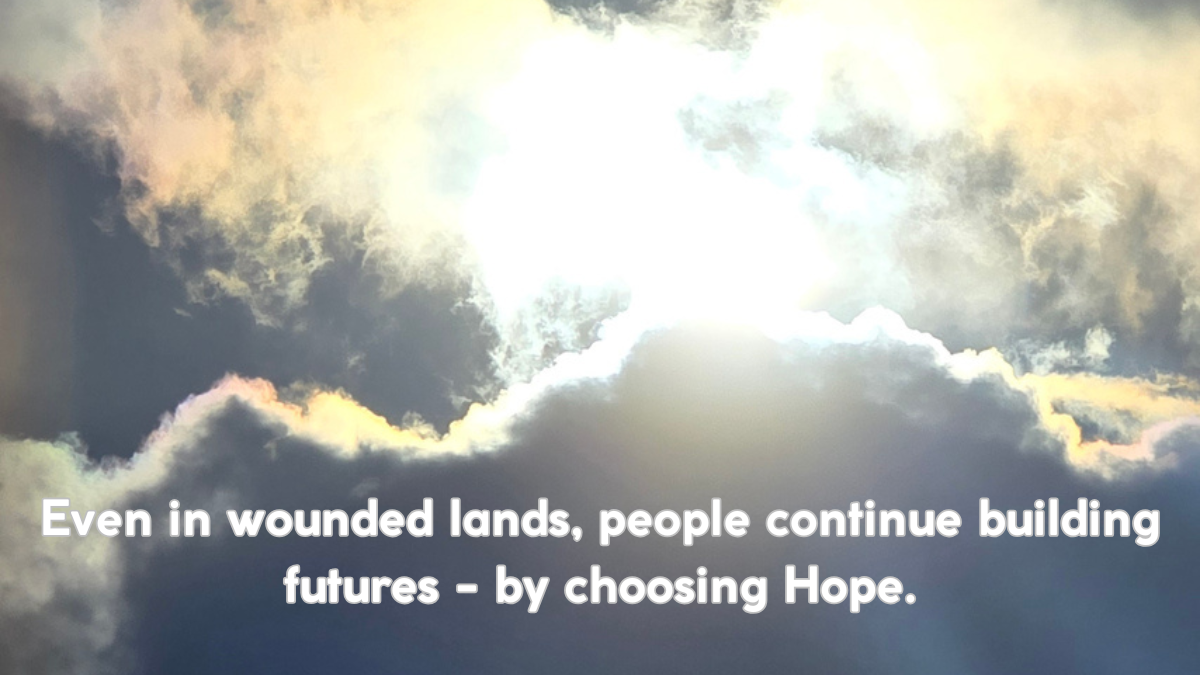
Living With Hope
Working remotely from a wounded nation is not easy.
It requires emotional resilience, mental discipline, and sometimes a great deal of patience.
But it also reveals something powerful about the human spirit.
Even in difficult circumstances, people continue creating, working, supporting their families, and contributing to the world.
They continue choosing hope.
Life, despite everything, continues moving forward.
Sometimes fragile.
Sometimes uncertain.
But always carrying the possibility of renewal.
And perhaps this is the most important lesson of all:
Even in wounded lands, people continue building futures.
Comments are closed.
Related Post
AI, War, and the New Media Reality: When Truth Becomes Optional
We are no longer witnessing wars only on the ground.…


I completely agree!! it’s incredibly difficult to carry on with everyday responsibilities and try to live normally when something so heavy is happening back home. It becomes even more complicated as an immigrant: you’re surrounded by stability, routines continue, and life moves forward around you, even though your mind and heart are elsewhere. People may be aware of the situation, but they don’t fully feel what it means to have your home country affected, it creates a kind of emotional disconnect that’s hard to explain.
On top of that, social media often amplifies the distress. Once you engage with a single post or search for updates, algorithms quickly flood your feed with similar content (images, news, and constant alerts about what’s happening). Instead of offering a moment of escape, it pulls you deeper in, making it harder to step away. You find yourself repeatedly checking for updates, almost without realizing it, which only intensifies the anxiety and emotional exhaustion.